

Screen Printing: The Ideal Solution for Personalizing Your Items
What is screen print transfer
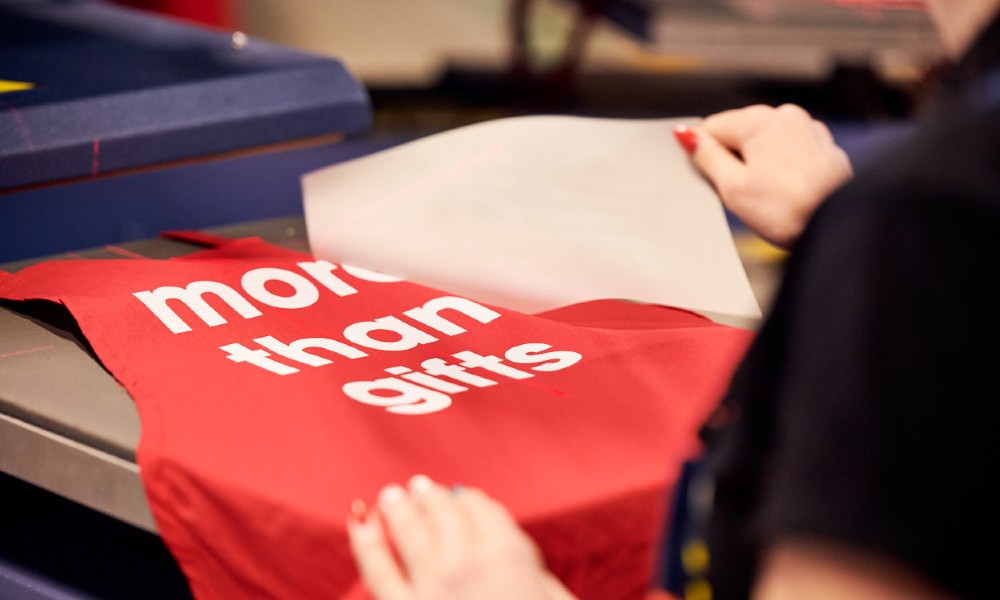
Screen print transfer is a printing technique that allows logos and graphics to be transferred onto fabrics and other materials. Unlike traditional screen printing, the ink is not applied directly onto the item but first printed onto a special silicon-coated paper.
Later, using the heat and pressure of a heat press, the graphic is transferred onto the final item, resulting in a precise, vibrant, and durable finish.
How screen print transfer works
The process consists of several stages, each essential for the final result:
-
Artwork preparation: each color is separated and prepared for printing.
-
Printing on silicon-coated paper: colors are applied one by one on a white base.
-
Drying: between each color, the sheet passes through a drying tunnel.
-
Application of adhesive glue and powder: ensure perfect adhesion to the fabric.
-
Heat press transfer: heat melts the glue and pressure fixes the graphic.
-
Paper removal: the logo remains permanently imprinted on the garment or object.
The advantages of screen print transfer
Quality and precision
Fine lines, small text, and complex details are reproduced with great clarity.
Vibrant colors
The white base ensures uniformity and brightness on any fabric color.
Wash resistance
A high-quality screen print transfer maintains colors and adhesion even after many washes.
Application versatility
It can be used on cotton, polyester, blended fabrics, nylon, and technical materials.
Production flexibility
Transfers can be printed in advance and applied later, optimizing time and costs.
Where screen print transfer is used
There are many applications, including:
-
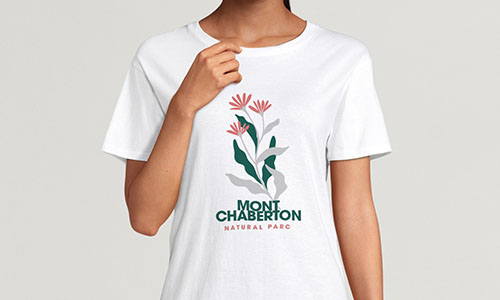
Promotional clothing: t-shirts, sweatshirts, polos, and custom jackets.
-
Sports uniforms: numbers and logos on football, basketball, and other sports jerseys.
-
Accessories: caps, bags, backpacks, and shoppers.
-
Corporate giveaways: promotional items for events and trade shows.
Screen print transfer vs other printing techniques
-
Direct screen printing: ideal for large runs but less suitable for complex details.
-
Digital transfer: perfect for photographic prints but less resistant to washing.
-
Screen print transfer: combines the quality of screen printing with the convenience of transfer, ensuring long-lasting and precise results.
Useful tips for a perfect print
-
Use high-resolution graphic files.
-
Wash garments at a maximum of 30°C to preserve colors.
-
Always iron inside out or protect the print when ironing.
-
Rely on experienced professionals for flawless results.
Sustainability and innovation
Today, screen print transfer can be made using water-based inks and low-impact processes, reducing the use of solvents. Moreover, the ability to print transfers in advance helps minimize production waste.
Advantages
|
Materials
|
Items
If the printing surface is flat, all items can be printed.
- Bags
- T-shirts
- Caps
- Umbrellas
- Waist bags
- Many others
Good to know
- Up to 8 PMS colors
Conclusion: why choose screen print transfer
If you’re looking for a technique that combines high quality, durability, and versatility, screen print transfer is the perfect solution. Ideal for companies, sports teams, and fashion brands, it allows you to achieve bright, durable graphics on a wide range of items.
Want to know more or request a personalized quote?
Contact us now: our team will guide you in choosing the best solution for your needs.
Posted in:
Personalization techniques
Related posts
-
Pad Printing: A Precision Printing Technique for Every Product
Pad printing is one of the most versatile and widespread printing techniques in the world of product customization....Read more
-
Screen printing: complete guide to the most versatile technique for customizing products
Screen printing is one of the oldest and most versatile printing techniques in the world, still widely used today for...Read more
-
Digital Printing: The Complete Guide to Personalizing Gadgets and Products
Digital printing is a modern technique that allows images, logos, and text to be reproduced directly onto a product...Read more
-
Laser engraving: the technology that transforms gadgets into unique experiences
In the world of customization, laser engraving has become synonymous with precision, elegance, and durability. More...Read more
-
Digital Transfer: The Revolution of Printing on Fabrics and Surfaces
In recent years, the world of fabric printing, clothing, and customized gadgets has undergone a true revolution...Read more