

Screen printing: complete guide to the most versatile technique for customizing products
Screen printing is one of the oldest and most versatile printing techniques in the world, still widely used today for its quality, durability, and ability to work on a wide range of materials. This method allows for long-lasting and vibrant results, making it ideal for customizing clothing, gadgets, advertising panels, glass, plastic, metal, and much more.
In this comprehensive guide, we will explore what screen printing is, how it works, its advantages, and the most common applications.
What is screen printing?
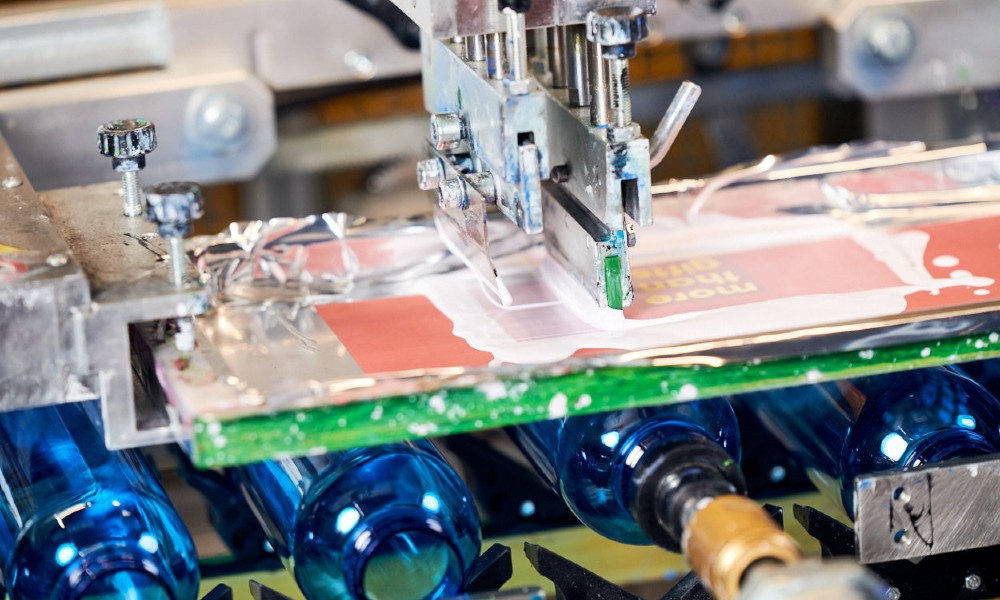
Screen printing is a technique that involves transferring ink or color onto a surface through a screen frame made of an extremely fine mesh, similar to fabric, with countless tiny openings.
The process uses a stencil (or mask) that blocks ink in certain areas, allowing color to pass only through the desired parts, thereby recreating a design, text, or logo.
One of the main characteristics of screen printing is that one color is printed at a time. This means that for multicolored images or logos, multiple screens are created, each dedicated to a specific color. Once the printing is complete, the products are passed through a drying tunnel to fix the ink, making it resistant to wear, washing, and external agents.
Origins and spread of screen printing
Screen printing has ancient origins: the earliest examples date back to China during the Song Dynasty (960–1279 AD), when silk and paper stencils were used to decorate fabrics. Over time, the technique spread to Japan and other Asian countries, eventually reaching Europe in the 18th century.
The real boom, however, occurred in the 20th century, when screen printing became popular not only industrially but also artistically: think of Andy Warhol, who made it famous with his pop art works.
Today, screen printing is still widely used in both artisanal and industrial settings, thanks to its versatility and ability to deliver high-quality results.
How screen printing works: step-by-step process
The screen printing process consists of several stages, each crucial for achieving a perfect result:
-
Screen preparation
The screen consists of a frame made of aluminum or wood, on which a very fine mesh is stretched. A photosensitive emulsion is applied to this mesh. -
Creating the stencil
The image or logo to be printed is transferred to the screen through light exposure. The illuminated areas harden, while the others are washed away, creating the stencil that allows ink to pass only in the desired areas. -
Applying the ink
Ink is placed on top of the screen. Using a squeegee, it is pushed through the mesh and deposited onto the surface below. -
Drying and fixing
After printing, the object passes through a drying tunnel or is heated to permanently fix the ink, making it resistant and durable.
This process is repeated for each color until the final design is complete.
Screen printing in clothing
One of the most important sectors for screen printing is clothing. Customized t-shirts, sweatshirts, and caps are primarily produced with this technique, which ensures optimal results even after multiple washes.
Companies use it to create promotional clothing, while independent fashion brands also choose it for creative and exclusive collections.
Screen printing for marketing and advertising
Screen printing is also widely used in visual communication and marketing. Custom gadgets, signs, billboards, and promotional materials printed with screen printing have a strong and lasting visual impact.
Thanks to its durability, screen printing is also ideal for products intended for outdoor use, such as road signs, informational panels, or corporate plaques.
Artistic screen printing: tradition meets creativity
Besides industrial use, screen printing plays a key role in the art world. Many artists use it to produce limited edition graphic works, taking advantage of its ability to create intense colors and unique textures.
It is a technique that combines craftsmanship, manual skill, and creativity, keeping an ancient knowledge alive while adapting it to contemporary needs.
Why choose screen printing?
Choosing screen printing means opting for a reliable technique with strong visual impact, capable of enhancing any product. Whether promoting a brand, creating artwork, or customizing clothing, screen printing remains an ideal solution for those seeking durability, quality, and versatility.
Advantages
|
Materials
|
Products
- Bags
- T-shirts
- Caps
- Umbrellas
- Many more
Good to know
- Only Pantone (PMS) colors are possible, no gradients
- 360° printing for cylindrical items

Screen printing is a technique that has stood the test of time without losing its relevance. Even in the digital printing era, it continues to shine thanks to its ability to deliver unique and durable results on a wide variety of surfaces.
If you are looking for a customization method that combines tradition, durability, and color quality, screen printing is undoubtedly one of the best choices.
Want to learn more or request a personalized quote?
Contact us now: our team will guide you in choosing the best solution for your needs.
Posted in:
Personalization techniques
Related posts
-
Pad Printing: A Precision Printing Technique for Every Product
Pad printing is one of the most versatile and widespread printing techniques in the world of product customization....Read more
-
Digital Printing: The Complete Guide to Personalizing Gadgets and Products
Digital printing is a modern technique that allows images, logos, and text to be reproduced directly onto a product...Read more
-
Screen Printing: The Ideal Solution for Personalizing Your Items
Screen print transfer is a printing technique that allows logos and graphics to be transferred onto fabrics and other...Read more
-
Laser engraving: the technology that transforms gadgets into unique experiences
In the world of customization, laser engraving has become synonymous with precision, elegance, and durability. More...Read more
-
Digital Transfer: The Revolution of Printing on Fabrics and Surfaces
In recent years, the world of fabric printing, clothing, and customized gadgets has undergone a true revolution...Read more